Thursday, January 31, 2013

My experience in Pre-writing


     The moment I hear a teacher say "pre-writing", I feel a black knot begin to form in my stomach. It's sticky tentacles reach up and threaten for gag me from within, oozing it's slimy hatred out my mouth.  Pre-writing. I hate it. The idea of it is good, planning out you ideas before you write them SHOULD make them easier to write about and organize. Should. The problem for me however, is that I don't even know what I'm writing or where I'm going until about halfway through a paper. I don't even usually write my thesis at first if I can avoid it(aka we don't have to turn them in early-say- on turnitin.com making me very miserable and at a loss for words as I struggle to condense my entire unwritten paper into one line).  I just let words come and hope they make sense. My words tend to say what they want regardless of what I intend anyway.  Pre-writing for me is just a hassle, it takes up precious time for times writing and often isn't follow when I write the actual paper so it is indeed pointless.
        The contradicting thing however, is that in creative writing I am a  meticulous pre-writer. In a short or long fiction story, I must write down  every event that will occur in order, interesting lines I plan on using, and physically plan out every character(though that's mostly because I am terrible at characters....). My pre-writing is not to help me organize though, more so to help me remember all my ideas until I  have the attention span to actually write them- which, sadly, isn't often. The only time it is ever used for organization or planning purposes is for novel length ideas, not one of which I've ever bothered to go back and write, be it because I lack the focus, or the motivation once I see how the whole story is going to go(its simply not exciting any more....).
     In the end, prewriting doesn't help me much. I might draft a thesis or topic sentences a few times as I come to them, but more so to get wording rather than ideas right. I do not enjoy having to plan what Im going to do. It feels...restraining.  I need the freedom to write what comes to me, as it comes to me. I can't force my ideas to cleanly plan themselves out before I have a chance to fully understand what my ideas even are.

So Long and Good Night


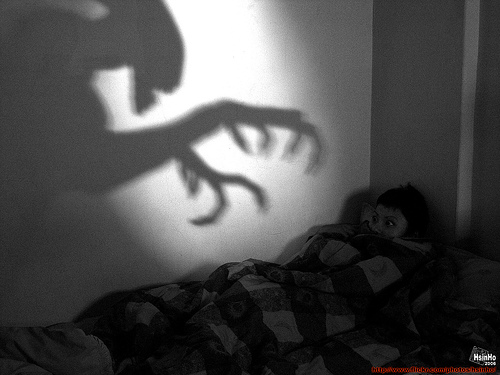
      What must it be like, to live in a constant hell? Awake or asleep, you never escape the pure misery and purposelessness chasing you. The man said it was good to have bad dreams given their situation, for it meant they haven't given up, aren't simply longing for a release.  I suppose I can understand that statement to some degree, but I don't agree. When we have reoccurring bad dreams, it usually means something is wrong (which it obviously is with the characters given their situation),  and is more of an indicator of depression and suicidal tendencies than good dreams are... Does the man not realize that? To never have good dreams means that you have nothing left that can make you happy, nothing left to look forward to, enjoy or hope for. If they never have good dreams, do they really have nothing to live for? Why do they go on? Have they truly so deeply accepted that they'll never experience happiness again that not even their subconscious can imagine it?

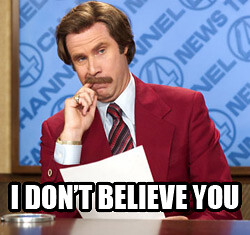
The Road:I DON'T Believe You.

       The Road is by no means a poorly written or uninteresting novel, yet I couldn't quite find it engaging.  I simply can not accept the Man's character. Perhaps it's because  I'm not a parent, or because I've never been starving and running for my life after experiencing the apocalypse, but I cannot understand the Man's mindset.
        "We carry the fire,"
       Are these just words to him? It appears so to me. For someone who lives solely to protect his son and keep "good" alive in the world, I can't see him as... righteous. He lacks conviction too much for me to understand why he keeps living, why he keeps his son living.  His "We carry the fire" speech is his only excuse to keep living, but just because you don't eat people, doesn't mean you're a good person or carrying the fire. If he was truly a kindhearted person, why is only the son the one always pressuring him to help people? He may be the lesser of two evils, but he is by no means a good guy. If it were up to him, he'd leave every starving man or animal they pass. I don't blame him for that though, it's every man for himself if you want to survive in his world. There is no fire left for him to carry.
      So that disregards his reason for living of "carrying the fire"...he certainly isn't doing it. But if he lives solely for his son, how come he couldn't muster up enough courage to overcome his sorrow and shoot his son when he died? A small act of compassion to save his son from dealing with the cannibal ridden, lonely and broken world he tried to hard to protect him from wasn't able to break through upon his death. (it was pure luck and by no knowledge of the father that the veteran was able to take in his son after his death). I can't believe his character because I don't understand why he was even there.


Thursday, December 13, 2012

Final 2012 Post:I Can't English.


   Blogs. Stupid blogs. At the beginning of the semester , the idea of writing a blog for our grade seemed brilliant. It was so open ended and gave me the chance to say what ever I wanted. By now, I know better, it is simply a tool to bring our grade down.  It's hard enough to remember to actually do them, but then our classmates get to read (and judge...) our words? Then I realized the teacher would get to see our  opinions...and realize how stupid they are. The freedom seemed to be too much for me. I had no idea what to write about, no idea how to make it sound intellectual and contain proper reflection and analysis. I still don't know, actually. The last blog of the semester and I am still simply ranting and complaining,  and hoping for the best. What should I be writing here? I felt better once we received weekly blog suggestions, but even then I was at a loss on how to articulate it as such that I don't sound like I'm copying everyone else's posts or am just plain dumb. This inability to communicate my ideas seems to have bled into my class work as well. I loved reading and watching everything that we were given, but couldn't for the life of me properly explain or analyse it in class!  I got to a point where I just told my friends,
      "Don't ask me, I can't English."
   Why is it so hard to write a good essay? Why is it that I feel I can now justly call The Importance of Being Earnest one of my favorite films but can't explain it's humor to my mother?  Why can't I ever rewrite a passage for the warm-ups? Why can't I English?  In no other class besides my Junior and senior English have I ever felt so entirely shallow-brained and useless. Yet I dare say I enjoy reading and writing? Blasphemy.
   I hope that next semester I will feel more secure in my interpretations and usage of the English language and it's works.

Mullins, I don't blame you. You're a fine teacher. I blame myself. I hope my work wasn't really as bad as I felt it was.

How I've felt quite often:

Blog makeup 12/06

Students Rave at Literary Genius of Hamlet!

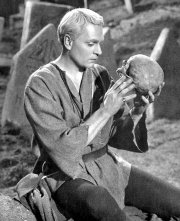
     Upon completion of Shakespeare's Hamlet, students in Mr. Mullins AP English class are in a frenzy of excitement. The literary work brought up several issues which- according to recent films, school discussion and many studies- are very relevant in students lives, such as suicide, depression, sex and, f course, procrastination. These reoccurring ideas in Hamlet, really helped the students be able to relate to the characters. The shallow characters too helped students to picture the story line happening in their very lives. the work proved to be a perfect selection for High school students. It even had an abrupt ending to keep them interested and on their toes while still teaching them valuable lessons, such as the importance of extracting revenge,  how patriarchal prevails - the females in the class often felt relieved at the sight of the weak willed Ophelia and Queen, making their own dependence on their significant others or family seem more normal- and  obvious all great works must have everyone important in the plot die at the end- plus some. One student remarked,
     "At first the confusing language left me a little lost, but so does most AP English grade writing so I took it as a chance to learn a life skill of effectively utilizing all resources at hand (not cheating) by looking it up on Sparknotes. A lot of the words still sounded weird though, like they were made up, but I liked it because it reminded me of Doctor Seuss- it was like being a kid again!"
     Overall, Hamlet has proved to be a literary masterpiece and impressed the students a great deal. I'm sure that after reading this, all students will come away with a new respect for Shakespeare.
   

Blog makeup 11/29


Words Words Words Words Words
When shall I use you?
I could lie and say  I love vocab quizzes and admire their ability to enhance  my every sentence to a degree such that people are left utterly speechless, but I'm sure my adulation would quickly be sensed as sarcastic.
This not to say that I believe they are completely useless and are teacher is a dunce for assigning them, now that is a calumny if I could ever identify one.
I recognize they are useful to my understanding of advanced texts and writing at an AP level. But I wish I could see the words used more often in text, to see examples as to how they are properly used.  I would quit complaining so much if said examples were given, I would  happily capitulate to those terms.
In fact, I find that arrangement beneficial to all parties. Students would better remember the terms if they see them used and could grasp a better understanding of them, what more could a teacher wish for? I see no reason for one to censure the simple suggestion of providing real life examples of our vocabulary words.
I do not mean to dissemble  the nature of my complaints, for I admit that I will be wary of these vocab quizzes regardless.
I believe myself not to be too much of a pusillanimous individual, so I will say honestly that I find vocab quizzes to be utterly horrid, nor do I mean that in any  light-hearted or droll sense, I  find them, no joke, horrid.
Mullins, if you read this I hope you don't find my statements offensive, or my suggestion peremptory, but I stand by my suggestion. If we can not trash the vocab quizzes, please at least let us see them in a first hand source so we know we aren't learning made-up words. Also, please don't be angry at my calling them horrid. If I get scolded for voicing my opinion then I just might go home and sob on my couch, with a surfeit of junk food surrounding me- true to stereotypical female way of dealing with things.

Sadly, I can't think of a way to incorporate palpate. :(

Blog makeup 11/08


If English class has taught me one thing thus far, it is that the main characters in all old famous plays are all emotionally unstable and illogical. Oedipus's pride  and ignorance led to him stabbing out his own eyes, now Hamlet is suffering from depression and can't seem to force himself to act. Hamlet also demonstrates a sense of pride, much like Oedipus in that he assumes he CAN extract revenge, and that he CAN depend on Oephelia, and at the end, that he CAN trust his friend and that he CAN  beat anyone in a sword match.  he doesn't want to do any of it, but has no doubts that he can pull off whatever plan he thinks of. Oedipus too never questioned his own logic or guilt until it was undeniable. Though the plays are hundreds of years and lands apart, they bear the same basic ideas. What about arrogance did these people find so appealing? What about fate and helpless tragedy enraptured people for so many centuries?